A large, modern hard-shell wheeled suitcase stands upright beside the inside of the front door

How to Prep a London Home Before a Long Holiday Away

The flat doesn’t stop while you’re gone. That’s the thing people get wrong about it. They picture the place paused, everything holding still in the dark until they come back and switch it on again, which is a lovely image and about as accurate as thinking the fridge stops when the light goes off, and what happens instead is that a warm sealed box full of organic material carries on being a warm sealed box full of organic material, with nobody in it opening windows and nobody noticing anything.

Ten days, you’ll get away with almost anything. Six weeks is a different animal.

I clean a lot of flats the week people fly and a lot more the week they land, and the second job is always worse and always avoidable. Here’s what matters, roughly in the order it goes wrong.

Why does a shut-up London flat smell of drains within a fortnight?

Evaporation. There’s a water seal in the bend under every sink, bath, basin and shower in the flat, and its entire job is to stand between you and the soil stack. In a warm flat with the windows shut, that water goes. The seal in a shower gully or a rarely-used ensuite basin can drop far enough to stop working in about three weeks of August.

Top them up on the way out. Run every tap for ten seconds and flush both loos. If you’re going for more than a month, tip a couple of tablespoons of cooking oil down the ones you never use – it floats, and it stops the water underneath evaporating. It sounds like a bodge because it is one, and it works.

The washing machine is more common than the drains and nobody expects it. Detergent drawer, door seal, and about half a pint of grey water sitting in the sump. Shut the door on that in July and open it in September and you’ve got something that smells like a canal at low tide.

The last twenty minutes before the taxi

Machine door wedged open, dishwasher door wedged open, fridge door wedged open if you’ve emptied it, and every internal door in the flat left open too. Air has to be able to move between rooms or the far bedroom goes stale and the wardrobe goes worse. Two windows on the latch, one at each end of the flat, if the security situation allows it. If it doesn’t, trickle vents open, all of them.

Take the tea towels with you. They’re always damp, they always end up folded in a drawer, and they’re always the first thing that goes green.

What has to leave the flat with you?

The bin. Obviously the bin, and yet.

Everyone empties the kitchen bin. Almost nobody deals with what’s under the liner, which by August in a London kitchen is a film of leaked juice across the bottom of the plastic, and that’s the fruit fly nursery. Liner out, bin body washed with hot water and washing-up liquid, dried, left open and empty. Same for the food caddy. Same for the bathroom bin, which nobody thinks about and which contains, at minimum, a fortnight of cotton wool.

Then the fridge, and this is the one I’d put money on. You’ll clear the milk. What you’ll leave is the jar of harissa with the crust round the lid, the half lemon in cling film, the bag of spinach that’s already three days from liquid, and the drawer at the bottom that has liquid in it right now, which you know because you can hear it when you shut the door. Six weeks is a different animal. Spinach at six weeks is a smell that stays in the plastic after the spinach has gone.

Fruit bowl, and I mean the bowl as well as the fruit, because the ring of syrup a peach leaves under it is what the flies come back for. Bread bin. The bag of potatoes under the sink that will sprout, rot, then leak through the bag onto the cupboard base. Cat litter, if the cat’s gone to your mum’s.

The three things left behind every single time

Coffee grounds in the puck drawer. The capsule bin on the side of the machine. Whatever’s in the sink strainer.

Wet organic matter, dark warm plastic container, no ventilation. Every one of them will be furred by the time you’re back, and two of them are awkward to clean once they’re furred, because the plastic keeps the smell long after the fur’s been scrubbed off.

What breeds in an empty flat in August?

Clothes moths, and I’d rank them above every other risk on this list including the fridge.

London has had a bad moth situation for years now – Victorian conversions, wool carpets, gaps under floorboards, and no cold winter to knock the population back. The ones you see fluttering at the ceiling are males and they eat nothing. The damage is larvae, in the dark, in still air, on anything with keratin in it: wool, cashmere, silk, felt, and the underside of a rug where the pile meets the floor.

An empty flat in August is precisely what they want. Nothing moves, nothing gets worn, nobody vacuums, and the temperature sits in the twenties for weeks.

Bassein Park Road, Shepherd’s Bush, W12, a few summers back. Couple went to Australia for seven weeks. They came home to a wool rug that looked fine from standing height and had a hole the size of a dinner plate under the bed side of it, a suit jacket with both shoulders gone, and a jumper you could read through. They’d assumed a locked flat was a safe flat. The moths were already in that carpet when they left – seven undisturbed weeks was just the first proper run at it the larvae had had.

Why cedar balls and lavender bags do nothing

They don’t work. I’ll say it plainly, because the moth shelf in every hardware shop in London is largely theatre.

Cedar oil does something to newly hatched larvae at concentrations you’d only reach sealed inside a proper cedar chest. A ball hung in a wardrobe with a two-inch gap under the door is a scented ornament. Lavender bags are a scented ornament that smells nicer. Pheromone traps catch males, which tells you that you have a problem and does almost nothing about the females already down in the skirting.

What works is boring. Wash or dry-clean everything woollen before you go, because larvae feed on the sweat and skin oil on the fibre as much as the fibre, and clean wool is a much worse dinner. Bag the clean things in sealed plastic, not a suit carrier with an open bottom. Anything unwashable goes in the freezer for a fortnight and comes out fine. Vacuum the edges of every room, right into the gap where carpet meets skirting, then empty the vacuum outside the flat rather than into the kitchen bin you’ve just scrubbed.

Do you clean before you go, or when you get back?

Before. Everyone does this the wrong way round, and it’s the most useful sentence in this article.

The instinct is to leave it a bit messy, have the holiday, blitz it on the Sunday you’re back. Which hands every problem on this list – the fridge liquid, the larvae, the sump water, the film under the bin liner – six undisturbed weeks to develop. Clean first and none of them start. Clean after and you’ve stopped cleaning and started doing remediation, at a much higher price, jet-lagged, at ten at night.

The second reason is better than the first. Coming home to a clean flat is worth real money to you, and everyone knows the opposite feeling: the case dragged through the door into a kitchen that smells faintly of bin and a bed that isn’t made. That arrival costs you about two days of whatever good the holiday did.

The jobs that only work with nobody home

Some work wants an empty flat for a fortnight, so book it for the day you leave rather than the week you’re back.

Carpets first. A carpet cleaned properly is damp for hours, wants moving air and no footfall, and there’s no point in your ordinary life where you can give it that. An oven the same – a proper caustic clean wants the kitchen ventilated and nobody making toast in it. A stone floor that needs resealing, same again. A decent share of my August is spent in flats where nobody’s home, and the results beat anything I can manage on a Tuesday with a dog watching me.

What makes coming back not grim?

Strip the bed and make it up fresh before you go. That’s the trick. Nobody has ever told me it wasn’t worth it.

Then: bathroom cleaned and dry, one clean towel on the rail, loo lid down. Hoover last and walk backwards out of the flat. Leave the milk situation for later – buy a pint on the way from the station rather than trying to be clever with dates.

The one thing worth asking a neighbour to do

Not the bins. Not the post. Ask them to open the front door and stand in the hall for two minutes, once, somewhere around week three, and leave the windows on the latch for an afternoon if the weather’s decent. Two minutes of air exchange at the halfway point does more for a six-week absence than everything else you could delegate, and it means somebody has laid eyes on the place while there’s still time to ring you about it. Give them the moth brief as well if they’re the type: if the hall carpet has anything that looks like fine sand along the skirting, that’s larval casing and frass, and you’d rather know in week three than week seven.

Open every window the second you’re through the door. Before the cases, before the kettle, before you sit down. Two hours of that and it’s your flat again instead of somewhere you’ve walked into.

The Shepherd’s Bush couple bag everything woollen now. The rug didn’t make it.

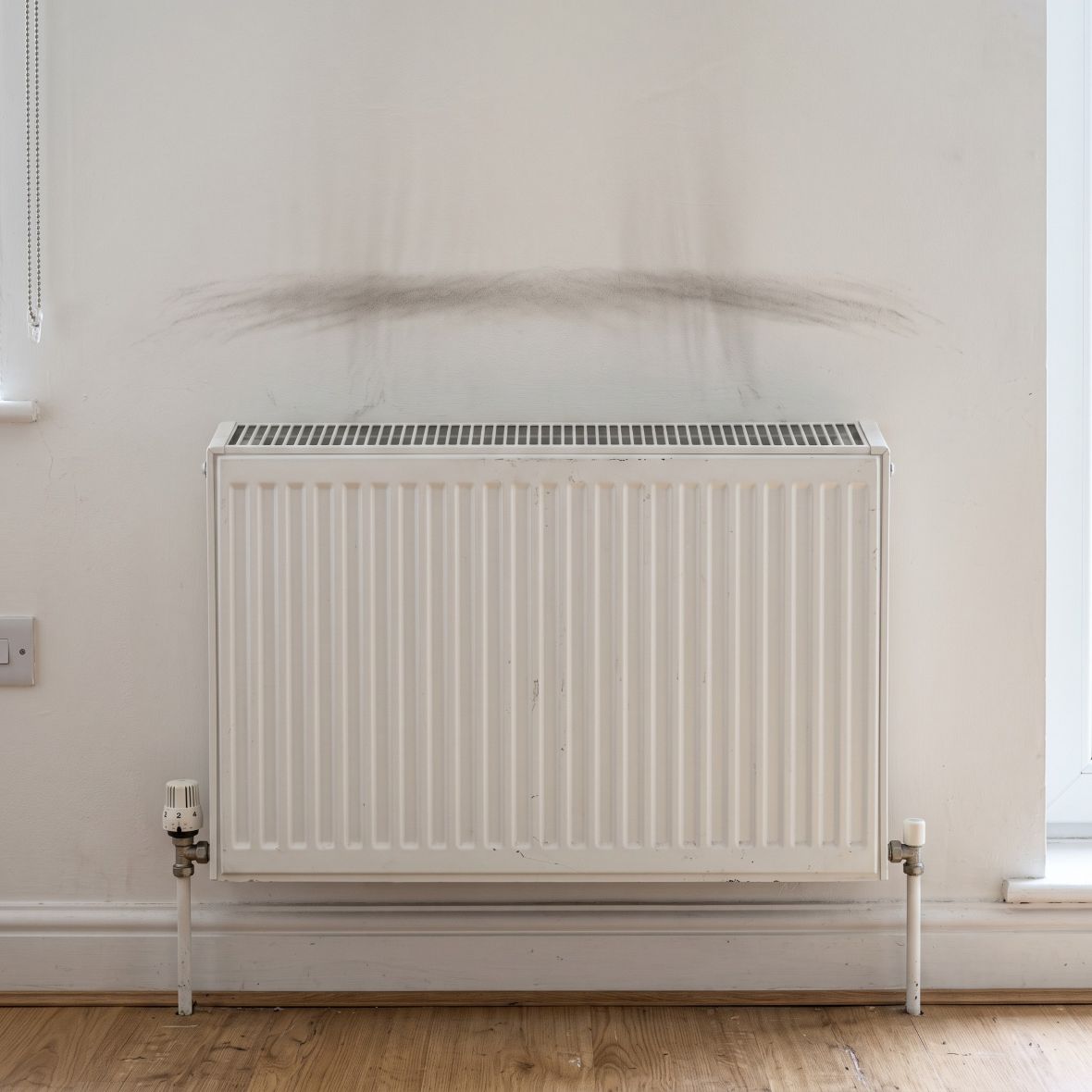
a standard white-painted steel panel heating radiator mounted on a light warm-white painted plaster wall inside a modest, lived-in upper-floor flat in a residential tower block in East London

How to Clean Radiators and the Dusty Wall Streaks Above Them

You’ve seen it. Grey-brown fans of dirt rising off the top of the radiator and spreading up the wall, darkest right above each convection channel, fading out somewhere around picture-rail height. Sometimes they’re so evenly spaced you’d swear someone had stencilled them.

Same story, every flat. And the reason I get asked about it in June rather than January is that people only notice when the heating’s been off long enough for them to look at the wall instead of stand in front of it.

Two jobs here, and they’re not the same job. Getting the dust out of the radiator is easy and takes eleven minutes. Getting the streaks off the wall above it is mostly impossible, and I’d rather tell you that at the top than sell you forty minutes of scrubbing that ends with you needing a decorator anyway.

Why is there a black stripe on the wall above your radiator?

Because a radiator is a pump, and you’re standing in what it’s pumping.

Cold air comes in at the floor, gets heated in the fins, and rises out of the top at a decent lick. That column of warm air carries everything the room has in it – skin cells, textile fibres from the carpet, cooking grease as an aerosol, soot from anything you burn, and whatever’s blown in off the road. The wall directly above is cooler than the air hitting it. Fine particles in a temperature gradient drift towards the cold side and stick there. Thermophoresis, if you want the word for it. Filtration soiling, if you’d rather the decorator’s term.

The wall is behaving like the filter in a vacuum. Air passes through and the dirt stays.

That’s why the marks line up with the channels, why they’re worse above the ends where the flow’s fastest, and why a wall in a flat where nobody smokes and nobody cooks stays clean for a decade while a wall two miles away goes grey in eighteen months. The physics is the same everywhere. What varies is what’s in your air.

Candles, and the thing nobody admits to

Paraffin candles are the single biggest cause I see, and people get defensive about it, which I find funny given the alternative explanation is usually worse.

A cheap jarred candle with a thick wick throws visible soot when it’s guttering, and a jar candle burnt down to the last inch is guttering the whole time. Burn two of those a night through a winter in a small Zone 2 living room and the radiator will lift every particle of it onto the wall for you and file it neatly by air current. Tea lights on a windowsill, same. Gas hob with a failing extractor, same. An open fire that doesn’t draw properly, worst of all.

I did a flat where the client swore blind it was the boiler putting soot into the room. It was forty quid a month of Diptyque and a door she kept shut.

What’s the fastest way to get dust out of a radiator?

Cold radiator, towel on the floor, hairdryer.

Turn the heating off a couple of hours beforehand – hot metal makes the dust cling and you’ll burn your knuckles on the pipework. Lay an old bath towel along the skirting, tucked right up under the radiator and out about half a metre, and dampen it. Damp is doing the work. A dry towel lets everything bounce off and go straight back into the room, which is how people end up sneezing for two days after cleaning a radiator and deciding they’re allergic to housework.

Then blow it out from the top with a hairdryer on cold, working left to right, one channel at a time. Everything comes out of the bottom and lands on the wet towel. Roll the towel up on itself before you lift it – don’t shake it out over the bath, that’s the whole point of the exercise gone.

After that, warm water with a splash of washing-up liquid on a microfibre wrapped round a wooden spoon handle or one of those long thin brushes, down each channel, twice. Dry it before you turn the heating back on, or you’ll bake a grey slurry onto the fins and it goes hard.

The towel goes underneath first

I’ve watched people vacuum a radiator with the crevice tool for twenty minutes and achieve almost nothing, because a vacuum only reaches what it can touch and most of the dust is on the vertical faces two inches in. The airflow method beats it every time. If you haven’t got a hairdryer, a can of compressed air works, and if you’ve got a leaf blower and no neighbours below you, that’s the professional version and it’s very satisfying.

Anything welded onto the fins has gone past dust – grease and time have got into it – and it needs the wet cloth and some patience.

Can you clean the streak off the wall, or is it paint?

Here’s the part people don’t want.

If the wall is matt emulsion, which in London flats it is about nine times in ten, you can’t clean it. Matt emulsion is porous. The soot has gone into the film, not onto it, and anything strong enough to lift it out is strong enough to take the binder with it. You’ll get a patch that’s cleaner than the streak and lighter than the rest of the wall, with a rubbed halo round it and a sheen where the vinyl’s been polished by the cloth. Three problems where you had one.

Sugar soap will do exactly this. So will magic sponges, which are fine abrasive blocks whatever the packaging says. So will the man who quotes you for a wall wash and is out of the door before it dries.

What does work: a chemical sponge, the dry rubber-latex kind sold for soot after a fire. It lifts loose surface deposit without water and without abrasion. On a lightly marked wall it might take you back to acceptable. On a proper streak it takes you from grim to slightly less grim, and then you’re painting.

Silk or eggshell, different answer. Wipes up fine, because there’s a film sitting on top for the dirt to sit on. Which is one reason I’d put eggshell above a radiator in any room where somebody burns anything.

The test on a bit nobody sees

Behind the sofa, or the strip of wall the curtain covers. Wet a cotton bud, roll it once on the paint, look at the bud.

Colour on the bud and no colour, it’s surface dirt and you might win. Colour on the bud and a lighter mark on the wall, stop – you’re removing paint, and every further pass makes the repair bigger. That’s a thirty-second test that saves people a weekend.

What about the covers, the valves and the gap behind?

Radiator covers are a mistake and I’d take them all to the tip.

They cut output by a chunk, they turn the space behind into a dust trap nobody has opened since the flat was sold, and the good ones – the MDF things with the grille – funnel the whole convection current straight up the wall in a narrower, faster column, which concentrates the ghosting instead of hiding it. People fit them to hide a stripe and make a stronger stripe eighteen inches higher.

If yours is screwed on, take it off once a year and clean behind it, and prepare yourself. Chatsworth Road, Clapton, E5, a couple of winters back: nice Victorian conversion, cover across the living-room radiator, previous tenant’s. Behind it was a felt of dust about the thickness of a beermat, two AA batteries, a cat toy, and a Christmas card postmarked 2016 addressed to somebody the client had never heard of. The cover came off, went in the van, and the room got warmer.

Why the cover is making it worse

The physics runs against you. A cover has to have a gap at the top for the air to leave through, and that gap is always narrower than the radiator is wide, so the same volume of air exits faster and in a tighter column. Faster air, more particles delivered per minute, one concentrated band across the wall rather than a soft spread. The grille also gives you a second filter to load up, and nobody cleans a grille. Take the cover off in October, look at the wall behind it, and you’ll see the stripe the cover was allegedly hiding – it’s there, it’s just been moved.

The gap behind the radiator itself: floss it. A length of old sheet, torn into a strip, fed down the back and worked side to side. Nothing else fits and every gadget sold for the job is worse than a rag.

How do you stop it coming back?

Burn less. That’s most of it, and it’s the bit people skip because it sounds like a lifestyle instruction rather than a cleaning tip.

Beeswax or rapeseed candles instead of paraffin, wicks trimmed to about five millimetres before every light, and nothing burnt down to the dregs in the jar. Extractor on before the pan goes on the hob, not after the smoke alarm. Vacuum the carpet properly rather than briskly, because carpet fibre is a huge share of what’s going up that wall.

Then the radiator itself, twice a year, before the heating goes on in autumn and once in the new year. Ten minutes each. Same story, every flat – the ones cleaned in October never develop the stripe at all, and the ones left until they’re grey are already a paint job.

The ten minutes in October

Diary it against the clocks going back, because that’s the only date anyone remembers. Heating off the night before, towel damp, hairdryer, done before the kettle’s boiled. The point of doing it then rather than in February is that the first three weeks of heating do most of the year’s damage – the radiator has a summer’s worth of dust in it, the wall is cold, and the first proper cold snap fires the lot upwards in one go. Clean it in February and you’re cleaning a radiator that’s already put its payload on your wall.

If you’re painting anyway, eggshell above the radiator, and leave a decent gap behind any furniture you push against that wall.

The Christmas card, by the way, went in the bin. I did check the name first.

What’s a Fair Tip For a Regular Domestic Cleaner in London?

The question comes up every December, and it always arrives sideways. Never a straight ask. It’s a text at half nine at night that starts “sorry, random question” and then hovers around the subject for four lines before landing on the actual thing, which is: how much, and in what, and do I put it in a card?

Awkward, isn’t it.

I’ll give you the number, because that’s what you came for. Then I’ll tell you why the number is the wrong thing to be thinking about, and you can take that or leave it.

Do you tip a domestic cleaner in the UK at all?

Yes, and mostly at Christmas, and mostly in cash.

Britain never built a tipping habit around domestic work the way it did around restaurants and cabs, so there’s no script and everyone improvises. What we’ve ended up with is a once-a-year lump – sometimes a week’s money, sometimes a note folded into a card, sometimes a bottle of something and nothing else. Roughly half my regular clients do it. The other half don’t, and I’ve never once thought less of them for it, because the ones who pay properly through the year have already made their position clear.

The confusion is imported. People have absorbed twenty per cent from American television and hotel bills, and they try to apply a per-visit percentage to a service they use fifty times a year, and it doesn’t fit. Tipping twenty per cent on every clean would be an enormous sum by March, and nobody does it, so instead they do nothing all year and then panic in the third week of December.

Where the awkwardness comes from

You know your cleaner’s name and you don’t know her hourly rate. That’s the whole problem in one line.

If you book through an agency, you pay the office and the office pays her, and the split isn’t on the invoice. So when you go to hand her a tenner you’re doing it blind – you have no idea whether that tenner is a nice gesture on top of a fair wage or a small patch on a bad one. And you can’t ask her, because asking someone what they’re paid while they’re cleaning your bathroom is not a conversation either of you wants to have standing up.

What’s the going rate when people do tip?

For a regular weekly cleaner, one visit’s worth of money in December is the shape most people land on and it’s a decent instinct. If your cleaner does three hours a week, that’s three hours’ pay, given once, at the end of the year. Fortnightly, the same. Someone who’s been coming for five years, more.

Per-visit tipping I’d leave alone entirely unless something out of scope happened – she stayed late because the plumber overran, she took a delivery in, she dealt with something a pet did that no reasonable person should have to deal with. Then yes, cash, that day, and say what it’s for. A tip attached to a specific thing lands. A tip attached to nothing just creates a question about whether it’s now expected every week, which is a burden you’ve handed her without meaning to.

Cash beats a bank transfer, and I’ll defend that even though it sounds old-fashioned. Not everyone in this trade banks in a way that makes a random Christmas transfer straightforward, and a note in a hand is unambiguous about who it’s for.

Christmas, and why it carries all the weight

There’s a reason the whole thing bunches into one fortnight. December is when the relationship becomes visible to you. You’re at home more, you can see her working, you notice the flat looks good for the people coming on the 27th, and the gap between what she does and what you’d assumed she does closes for about a week.

Then January arrives and everything goes back to invisible. That’s the actual mechanism, and it’s why the December lump exists at all: it’s a year’s worth of noticing, compressed and paid off in one go.

Does the money reach your cleaner?

Sometimes it doesn’t, and this is the bit of the trade I’d happily see cleaned up.

Some agencies take a cut of tips. Some have a policy against tipping altogether that exists to stop cleaners being poached, which is a fine commercial motive dressed up as an ethical one. Some pass on every penny and would be offended you asked. You cannot tell which sort you’ve got from the website, because every website in my industry says the same eight things.

Cash directly into a hand is the only method with no leak in it. Whatever the office’s stated policy, a folded note given on a Thursday afternoon in your kitchen is money that reaches the person who did the work, and no honest agency will have a problem with that. If yours does have a problem with it, you’ve learned something worth knowing.

The one question to ask the office

Ask what proportion of your hourly rate the cleaner receives. Once, by email, so there’s a record.

A firm that answers with a number is telling you the truth or has decided to look like it does, and either way you now have something to hold them to. A firm that talks about “competitive rates” and “market-leading packages” for two paragraphs without a figure has answered you completely. That’s an answer, and it’s the answer.

When is a tip the wrong tool for the job?

Here’s the argument I came to make, and it will annoy some of my own clients.

If you feel the pull to tip your cleaner, what you’re feeling is that she’s underpaid. A tip is what you reach for when you can’t change the price. You can change the price. You are the client, the rate is between you and whoever you pay, and a twenty-pound note in December from a household that hasn’t moved the hourly rate since 2023 is not generosity. It’s an apology with a bow on it.

Do the sum. A pound an hour, on a weekly three-hour visit, is roughly a hundred and fifty pounds a year – an amount you would not notice and she absolutely would. Give it as a tip and it arrives once, taxed by nothing but timing, and it’s gone by February. Put it in the rate and it compounds: it changes what she can plan around, what she can turn down, whether she can afford to be ill. A December cash gift can’t do any of that, because you can’t budget a thing that might not come.

I have never met a cleaner who’d rather have the lump.

The rate review nobody schedules

Put a reminder in your phone for the first week of every year. That’s the whole system.

When it goes off, look at what you’re paying and move it, without being asked, in line with what’s happened to rent and buses and everything else. Cleaners hardly ever ask. It’s a trade where asking risks the client going quiet and finding someone off an app for two quid less, and everyone in it knows it, so the rate sits still for years while the price of getting to your flat doesn’t.

Household in Lavender Sweep, SW11 – five years now, two kids, a spaniel that sheds like it’s a career. They review the rate every January without a word from anyone and they’ve never tipped me a penny, not once, no card, nothing. They’re among the best clients I’ve got and it isn’t close. Compare that with a place off St John Street in EC1 I did for two years at the same rate throughout, where there was always a bottle of something decent at Christmas and a lovely note. I liked them. I liked the wine. I left, because the maths stopped working and the wine wasn’t a wage.

So what does a cleaner want instead?

Money, correctly, on time, in the rate. After that it’s a shorter list than you’d expect.

Somewhere to park, or at least a straight answer about the permit situation before the first visit rather than after a ticket. Heating on in winter, because a cold flat with wet hands is miserable work and it costs you about eighty pence. Products that work – if you supply your own and they’re all the pink stuff from the corner shop, she’s fighting your kitchen with a handicap and losing time you’re paying for. Somewhere to put a coat that isn’t the floor. Being told about the dog before she meets the dog.

And notice, occasionally. The thing about this job is that it’s only visible when it hasn’t been done. Nobody comes home and says the skirting boards look excellent. They come home and say the bin wasn’t emptied. Six months of that wears at a person in a way a tenner in December doesn’t touch.

What to write in the card, if there’s a card

Say the specific thing. Not “thanks for everything this year” – that’s the sentence people write when they can’t remember a single instance. Say that the flat was clean the week your mother came and it mattered, or that you noticed she got the mark out of the hall carpet and never mentioned it. Cleaners work alone in empty rooms and the entire feedback loop is silence, so one concrete observation lands harder than the note ever will. Then put the cash in and don’t make a thing of it at the door. The doorstep handover is where all the embarrassment lives. Leave it on the counter with the card, say the sentence you were going to say anyway, and let her put it in her bag without an audience.

Awkward, isn’t it. The generous thing and the cheap thing look almost identical from the outside, and only one of them shows up in her rent.

If you’re going to do both – good rate and a Christmas lump – then obviously nobody’s complaining. But if you’re picking one, pick the boring one. Set the reminder for January.

Weekly or Fortnightly Cleaner: Which Suits a Busy London Professional Better?

Nearly everyone rings me asking for fortnightly.

They’ve done the sum in their head on the walk back from the station and it looks obvious: half the visits, half the money, and the flat is only a one-bed anyway, and how dirty can one person get a place they’re barely in? Then they book three hours a fortnight, and by month four they’re texting to ask whether the cleaner could stay a bit longer because the bathroom never seems to come up as well as it did at the start.

Here’s my position, and plenty of people in my trade won’t say it out loud because fortnightly slots are easier to sell: for the overwhelming majority of London flats, two hours weekly beats four hours fortnightly at the same monthly spend, and it isn’t close. The second week is where the money goes. You pay for it twice – once in your own low-grade misery living in a flat that’s sliding, and again in the extra hour your cleaner needs to drag it back. That’s the maths.

There are flats where fortnightly is right. I’ll get to which ones. But the default has it backwards.

What changes in a flat between week one and week two?

Nothing much, and then everything at once.

Dust doesn’t work on a linear curve, whatever you’d expect. A flat in Zone 2 with sash windows onto a bus route picks up a visible film in about five days, and once there’s a film, footfall grinds it into the floor finish and it stops being dust and starts being a mark. Same with the kitchen. Splash on a hob wipes off in three seconds on day two. On day eleven it’s been baked on by six subsequent dinners and it’s a scraper job.

The bathroom is where the two-week gap bites hardest, and it’s the reason I keep having this argument. Limescale in London water forms crystalline layers, one on top of the last, and each layer traps the soap film and skin oil under it. Week one, that’s a wipe. Week two, you’re into acid and contact time, and if the flat’s on the hard side of the Lea Valley you’re into acid, contact time and a nylon pad. Something similar happens with the loo rim and the shower screen runners, where the deposit gets in under the seal and no amount of surface work reaches it.

The bathroom is the clock

Ignore the living room. If you want to know whether your flat can hold fortnightly, look at the shower screen after twelve days. If it’s got that ghosting you can feel with a fingernail, your flat is generating more limescale than the interval can absorb, and every visit from now on starts from a worse baseline than the last one. That drift is slow enough that people don’t see it happening. They just notice, eighteen months in, that the flat never feels properly clean any more and assume the cleaner’s gone off.

The cleaner hasn’t gone off. The cleaner is losing forty minutes a visit to work that shouldn’t exist.

Is fortnightly cheaper in the end?

Per visit, obviously. Per month, roughly the same, since you’ll end up booking longer sessions. Per year, no, and this is the bit people don’t cost.

Fortnightly flats need a deep clean. Not because anyone’s failing, but because the interval leaves residue that a standard visit is never scoped to remove – oven, grout, extractor filter, the underside of the kitchen cabinet doors where the handles are, the bit of skirting behind the bin. Weekly flats can absorb that work in twenty-minute slices across a quarter. Fortnightly flats can’t, so it accumulates until somebody books a one-off in April at deep-clean rates, and that’s a couple of hundred quid that never appears in the fortnightly-is-cheaper column.

Then there’s the rota problem, which is mine, not yours. A fortnightly slot is unstable. If your cleaner is ill or your Tuesday is a bank holiday, weekly means you miss one visit and you’re fine. Fortnightly means a four-week gap and you’re basically starting again. Every agency I know quietly prefers weekly clients because weekly clients don’t ring up in a state.

The hour you pay for twice

Run it properly. Take a two-bed flat, two working adults. Weekly at two and a half hours means the cleaner arrives to a flat that’s already close to baseline and spends the whole session on actual cleaning. Fortnightly at four hours means the first fifty minutes are triage – clearing surfaces, dealing with the sink, getting the bathroom back to a state where cleaning can begin. You’re paying professional rates for tidying. That’s the maths, and it’s why the fortnightly flats I go into look worse on the day I leave than the weekly ones.

Which London flats can actually hold a fortnightly rhythm?

Some can. I’m not pretending otherwise.

One person, no pets, no smoker, no builders next door, works in an office four days and eats out most nights, modern flat with good windows and a decent extractor, carpet only in the bedroom, no hard-water hell in the shower because there’s a softener in the block. That flat will sit at fortnightly for years and be perfectly pleasant. New-build blocks around Millharbour on the Isle of Dogs do this well – sealed envelope, mechanical ventilation, nothing coming in off the street.

Everyone else is kidding themselves. And I include in that the person reading this who has just decided their flat is the exception because they’re never home. Being never home is not the variable. The flat carries on being a flat whether you’re in it or not – the water still evaporates out of the U-bends, the dust still lands, the fridge seals still do what fridge seals do in a warm kitchen. Dog: weekly, and I’d argue for more. Toddler: weekly. Two flatmates on opposite shifts: weekly, because a flat with somebody always in it never gets a fallow day. Anyone who cooks properly more than twice a week: weekly, because a real kitchen produces aerosolised fat and that fat lands on every horizontal surface within about two metres and turns dust into a film that has to be dissolved rather than lifted.

The Islington job that changed my mind

Flat on Rheidol Terrace, N1, a couple of years ago. Solicitor, mid-thirties, out at seven back at nine, absolutely convinced she barely used the place and therefore needed me once a fortnight for three hours. Three visits in, I told her the flat wasn’t holding and she thought I was upselling her. Fair enough – I would have thought that too.

So we ran it her way for a full quarter and I kept a note each visit of what I couldn’t get to. By March the list had the oven glass, the grout in the shower, both extractor filters, the top of the kitchen units, and the inside of the fridge door seals, which were going black. She’d hardly cooked all winter. What she had was a Nespresso machine, a gym habit that produced a laundry rack of wet kit in the living room, and a cat.

We moved to weekly at two hours for the same money. Nine weeks later she said the flat felt like a different flat, which it was, because it was now getting attention before things set rather than after. I still go. The cat still hates me.

What does weekly buy you that fortnightly can’t?

Attention, and I mean that as a technical term.

A cleaner who’s in your flat every week knows what’s normal. She’ll spot the slow leak under the sink because the cupboard base looks two shades darker than last Thursday. She’ll notice the boiler pressure gauge has dropped. She’ll clock that the mould in the bedroom corner has come back before you do, because you sleep in that room and you’ve stopped seeing it. Fortnightly cleaners never build that model. Too much changes between visits for anything to stand out.

The other thing weekly buys is a floor under your bad weeks. Everyone in London has a fortnight now and then where the job eats everything. On weekly, that fortnight costs you nothing structurally – the flat wobbles and comes back. On fortnightly, one bad stretch plus one missed visit is a month, and a month is a deep clean.

What to do in the four days after a visit

Nothing much, and that’s the point of paying for it. But two things hold a weekly rhythm almost by themselves: squeegee the shower screen when you get out, which takes eleven seconds, and don’t let anything live on the hob overnight. Those two habits are worth about half an hour of professional time a week. Everything else – the wiping, the bleaching, the ritual Sunday panic – you can drop entirely.

So how do you choose between them?

Count your bathroom, not your bedrooms.

One bathroom that two people shower in daily, in a London water area, is more work than an extra bedroom nobody enters. Then count pets, then count how many evenings a week the hob gets used, then look at the shower screen on day twelve and be honest about what you see. If it’s furred, fortnightly is a decision to live slightly grubbily and pay a deep-clean tax in the spring. Which some people are fine with, and I’ve no argument with anyone who’s made that choice on purpose.

The question to ask an agency before you book

Ask what they’d recommend for your flat, and then ask what their fill rate looks like on Tuesdays. A firm with gaps will happily sell you fortnightly and put someone else in the other week. A firm that’s busy will tell you the truth, because they don’t need your alternate Tuesday and they’d rather have a client whose flat doesn’t fight them. Ask, as well, whether the hourly rate changes with frequency. Most decent outfits price weekly lower per hour than fortnightly, and if yours doesn’t, that tells you something about how they’ve scoped the work. It’s the clearest signal you’ll get without a trial run, and a trial run costs you a month.

It’s the ones who think they’ve chosen the cheaper option that I end up correcting eighteen months late, usually while scraping something off an oven door.

How to Deal With Black Mould on Bedroom Walls in a Damp London Flat

It always starts in the same place. Behind the headboard, or in the corner where the external wall meets the ceiling, or on the skirting behind a wardrobe nobody has moved since 2019. A grey bloom first, so faint you think it’s a shadow. Then the black speckling, the smell that gets into the pillowcases, and the phone call.

I clean flats across Greater London and I’ve been doing it long enough to have opinions about this. Here’s the first one, and it’s the unpopular one: most black mould on London bedroom walls is made by the people sleeping in the room. The damp-proofing firm who quotes you £4,000 for a chemical injection course has a commercial reason to tell you the building is at fault, and in maybe one job in eight they’re right. The other seven are condensation, and condensation comes from breath, washing, showers, kettles, and a window that hasn’t been opened since the clocks went back. Which nobody wants to hear.

That doesn’t get landlords off the hook, and I’ll come back to that, because a flat that can’t be ventilated without freezing is a defective flat. But if you want the wall clean and staying clean, you have to start with what is growing there and why it chose your bedroom.

Why does black mould pick the bedroom first?

Because you spend eight hours a night breathing into it with the door shut.

An adult puts out somewhere around a pint of water vapour overnight just by existing. Two adults, double it. Add a partly-dried clothes airer in the corner because the flat has no outside space and the launderette on the high street costs more than the electricity, and you’ve got a sealed box being pumped with moisture for a third of every day. The air holds it while it’s warm. Then the heating clicks off at eleven, the room drops five degrees by three in the morning, and all that vapour has to go somewhere. It goes to the coldest surface it can find, which is the north-facing external wall, usually within about 30cm of a corner where the masonry meets a floor slab or a ceiling joist.

That’s the cold bridge. It sits two or three degrees below the rest of the room and it condenses first, every night, all winter. Mould doesn’t need a puddle. Aspergillus and Cladosporium will colonise anything sitting above roughly 80% surface humidity for long enough, and emulsion over plaster is a fine dinner.

What the cold corners are telling you

Look at where the growth stops. Condensation mould has soft, gradient edges and follows temperature – heaviest at the corner, thinning outward, often stopping dead at the line where a radiator’s convection current warms the wall. It’ll ghost the pattern of the joists behind the plasterboard. It’ll draw a neat rectangle around where a picture frame sat.

Rising damp, which is rare in London flats above ground level and doesn’t exist at all on a third floor, gives you a tide mark at a fixed height with salt bloom below it. Penetrating damp gives you a wet patch with a source – a cracked hopper head, a failed pointing joint, a bathroom on the other side of the wall. If your mould is a shape, look for a leak. If your mould is a gradient, look at yourself.

What kind of damp have you actually got?

Get a cheap hygrometer. £12, any hardware shop, and it will tell you more than a surveyor with a Protimeter poking at your skirting for twenty minutes.

Put it in the bedroom, not the hall. Read it at seven in the morning, before you open anything. If you’re sitting above 65% relative humidity at 17 degrees on a February morning, the wall is condensing and no amount of scrubbing will hold. If you’re at 45% and still growing mould, something is leaking and you have a building problem worth escalating.

I did a flat off Bellenden Road in Peckham a couple of winters back – SE15, a Victorian terrace conversion, top floor, tenant convinced the roof was gone. Black across the whole ceiling-to-wall junction on the back bedroom. The roof was fine. What she had was a bathroom extractor fan wired to the light switch, which she never used because the fan was loud and her flatmate slept badly, plus a tumble dryer venting through a hose that had come off the window bracket and was dumping its entire load straight into the hallway. The ceiling was catching the lot. We cleaned it, her landlord fitted a humidistat fan that ran on its own, and I went back eighteen months later for something else and the ceiling was still white.

The dryer hose is the one I see most. Second is drying washing in the bedroom with the door shut.

The tissue test for a fan that’s lying to you

Hold a square of loo roll flat against the extractor grille with the fan running. If it doesn’t stick there on its own, the fan is moving essentially no air and you’re heating the room to no purpose. Half the fans in London flats fail this. They spin, they make noise, the grille is furred with grey felt an inch deep, and the ducting behind it has been crushed by a joist or terminates in a loft void where it’s been quietly soaking the insulation for a decade.

What actually kills black mould on a painted wall?

Not bleach. Household bleach bleaches – it takes the pigment out of the hyphae so the wall looks clean while the colony sits there alive, and it’s mostly water, so you’ve just fed it. Two weeks later it’s back darker and the tenant thinks the flat is cursed.

You want a proper fungicidal wash, the sort with benzalkonium chloride in it, and you want to apply it and leave it. Don’t scrub first. Scrubbing dry mould aerosolises the spores into the room you sleep in, which is the single worst thing you can do with a wall like this.

The sequence I use, and it’s boring on purpose:

Ventilate – window wide, door shut to the rest of the flat. FFP3 mask, not the blue surgical thing, and nitrile gloves. Mist the growth with the fungicidal solution and let it sit for the contact time on the label, usually fifteen minutes or so. Wipe off with disposable cloths, one pass per cloth, straight into a bin bag. Never a sponge you’re going to rinse – you’d be painting spore soup back onto the wall. Second application, this one left to dry on the surface. Then leave the room shut and the window open for the rest of the day.

If the plaster is blown, or the emulsion peels off in sheets when you wipe, cleaning is finished as a strategy. That’s a job for a plasterer.

Why the smell survives the clean

The wall goes white and the room still smells of cellar. Those are microbial VOCs – geosmin and its relatives – and they’ll have gone into the plaster, the carpet underlay, the curtains, and every soft thing in a fitted wardrobe. Wash the fabrics at 60 if the label allows it. Steam the carpet edge. If a mattress has been against that wall through a whole winter, look at the seam side facing the plaster before you decide it’s fine, because I’ve seen mattresses I wouldn’t put in a skip without gloves.

How do you stop it coming back once the wall is clean?

Move the furniture. That is the highest-value thing on this list, and it costs nothing.

A wardrobe flat against a cold external wall creates a dead air pocket that runs two or three degrees colder than the room, and mould will grow behind it in perfect silence for years. Fifty millimetres of gap changes the whole calculation. I have solved whole jobs – a mansion block off Fordwych Road in NW2, since you ask – by pulling a chest of drawers 5cm forward and telling the tenant not to push it back.

After that: heat low and constant beats blasting it hot for two hours in the evening. The old pensioner logic of a cold bedroom being healthy was written for houses with chimneys and gaps under the doors. A modern London flat with new windows in a 1890s shell has the airtightness of a Tupperware and the thermal performance of a tent, which is the worst combination available.

Dry clothes anywhere but the bedroom, and if that means the bathroom with the door shut and the fan on, fine. Trickle vents open, all of them, all winter – yes, even the one over your bed. If there’s a PIV unit in the loft, leave it alone; people switch them off because of the draught and then ring me in March.

The anti-mould paint question

It buys you eighteen months and it does nothing about the reason the wall is wet. Fine as the last coat after a fix. Useless as the fix.

When should you stop cleaning and start writing to your landlord?

When the hygrometer says you’re doing everything right and the mould comes back anyway. When there’s no extractor in the bathroom, or the one there fails the tissue test. When the growth is bigger than about a square metre, keeps returning after two proper treatments, or anyone in the flat has asthma.

Awaab’s Law now puts social landlords on fixed statutory clocks for investigating and fixing damp and mould hazards, and the Renters’ Rights Act has built the framework to bring something similar to private tenancies – the private-sector end of it hasn’t fully landed yet, so check where that stands before you quote timescales at anyone. Even without it, the Homes (Fitness for Human Habitation) Act 2018 already covers you, and government guidance is explicit that landlords shouldn’t wave a damp report away as tenant lifestyle without investigating. Which, going by the letters I’ve read, nobody wants to hear either.

What to photograph before you send the email

Date-stamped shots of the growth with something for scale next to it. The hygrometer reading, in shot, in the room. The extractor grille. The tissue test, on video, five seconds. Every previous email in a numbered list with dates. Councils and ombudsmen respond to chronology and they ignore adjectives.

Then keep the wall clean while you wait, because whatever the landlord eventually does, you’re the one sleeping next to it tonight.

The Best DIY Natural Cleaner for Glass Surfaces

Are you tired of harsh chemicals lurking in your cleaning supplies? Discover the benefits of using natural cleaners, particularly for your glass surfaces.

This article explores common ingredients found in natural glass cleaners, including the magic of essential oils. You’ll find simple DIY recipes to create your own effective cleaner and tips and tricks for optimal use. Additionally, we compare the environmental impact and effectiveness of natural versus traditional cleaners.

A bottle of homemade natural cleaner for glass surfaces

Benefits of Using Natural Cleaners

Using natural cleaners has many benefits, including enhancing your cleaning routine and promoting a healthier living environment. By choosing eco-friendly options, you keep harmful chemicals out of your home, making it health-safe for children and pets.

Moreover, natural cleaning solutions like vinegar and bicarbonate of soda are effective and biodegradable, helping you reduce your ecological footprint. And let’s not forget—these homemade cleaners often leave behind a fresh scent, making your home feel even more inviting while still getting the job done.

Common Ingredients in Natural Glass Cleaners

The world of natural glass cleaners is full of common ingredients that give you a streak-free shine while keeping you and the environment safe.

Vinegar is a standout here; it’s a powerful cleaning agent that tackles grime and smudges like a champion. Then there’s bicarbonate of soda, a gentle abrasive that polishes glass surfaces without scratching them.

And let’s not forget essential oils, such as lemon juice. They clean and add a refreshing aroma that makes your cleaning routine a little more enjoyable.

Overview of Essential Oils and Other Ingredients

Essential oils are more than pleasant aromas; they are your secret weapon for natural cleaning solutions. They bring antibacterial properties to the table, enhancing your cleaning efforts. When you add ingredients like tea tree oil or lavender to your routine, you are not just creating a germ-free zone—you are also enjoying a refreshing scent that makes cleaning feel a bit more enjoyable. Furthermore, these natural ingredients are often hypoallergenic, making them safe for children and anyone with sensitivities.

Along with their lovely fragrances, each essential oil has special cleaning powers that can assist with various household tasks. For example, lemon oil is excellent for cutting through grease, while eucalyptus oil is brilliant at disinfecting surfaces. These natural compounds can transform those tedious chores into something delightful as the uplifting scents fill the air.

Choosing natural disinfectants reduces your exposure to harsh chemicals and benefits the environment. Thus, you can feel good about your cleaning choices while keeping your home safe and clean.

DIY Recipe for Natural Glass Cleaner

Making your own natural glass cleaner is incredibly simple. It allows you to tap into the power of natural ingredients while being environmentally friendly.

This straightforward recipe combines vinegar, bicarbonate of soda, and a few drops of essential oils to create a powerful cleaner that removes grime without leaving any streaks. Just mix everything in a spray bottle, and you’re all set to make those glass surfaces gleaming clean.

Step-by-Step Instructions

Follow these easy step-by-step instructions to make your own natural glass cleaner that’s gentle on surfaces but tough on grime. First, gather your ingredients—vinegar, bicarbonate of soda, and some essential oils—and grab a clean spray bottle for hassle-free application.

Once you’ve mixed everything, shake it well and grab a microfibre cleaning cloth to apply the solution to your glass surfaces for that streak-free shine.

This DIY cleaner is perfect if you want to cut back on harsh chemicals while still achieving sparkling clean windows and mirrors. To kick things off, make sure you’re in a well-ventilated area when you mix your ingredients; you don’t want those strong vinegar smells lingering. Distilled vinegar has purifying properties, and adding a few drops of essential oils like lemon or lavender can provide a nice, fresh scent.

Next, spray the solution generously on your desired surface, and use that microfibre cloth in circular motions to cover every corner. If you encounter any tough spots, let the solution sit briefly to break down the grime before wiping it away.

With these tips and tricks, you won’t just have a cleaner space but also enjoy the whole eco-friendly cleaning experience!

Tips and Tricks for Using Natural Glass Cleaner

Natural glass cleaners can be exceptionally effective, especially if you pick up simple tips and tricks to enhance your cleaning routine.

For a perfect streak-free shine, always apply your homemade cleaning solution to a microfiber cloth instead of spraying it directly onto the glass. This small change helps you avoid streaks and makes your cleaning more efficient, leaving no residue behind.

Best Practices for Effective Cleaning

To make the most of your natural glass cleaner, you’ll want to embrace some best practices that highlight the unique cleaning powers of your ingredients. Start by dusting your glass surfaces to remove any loose particles.

After that, grab your cleaning solution and treat the surface, using circular motions to ensure even coverage and a shiny finish.

Using a microfibre cloth can really improve your cleaning game since it absorbs moisture without scratching the glass. If you encounter stubborn spots, don’t hesitate to apply a second round of your solution, followed by some solid buffing to bring out that sparkling shine. It’s also a good idea to clean when the temperatures are moderate and to avoid direct sunlight, which can lead to streaks.

By making this routine a part of your schedule, you’ll see impressive results and help maintain the integrity of your surfaces, extending their lifespan and keeping them looking great.

Comparing Natural Glass Cleaners to Traditional Cleaners

When natural glass cleaners are compared to traditional ones, the differences stand out in terms of effectiveness, safety, and environmental impact.

Traditional cleaners often contain harsh chemicals that can leave behind undesirable residues. On the other hand, natural alternatives offer a non-toxic option that is kinder to both your home and the planet.

By understanding these differences, you can make informed choices about your cleaning products.

Environmental Impact and Effectiveness

The environmental impact of using natural glass cleaners is far less harmful than traditional options, making them a sensible choice for anyone looking to be eco-conscious. These biodegradable products don’t just reduce pollutants sneaking into the environment; they also clean exceptionally well without compromising safety. That’s a win-win for anyone wanting to keep their home clean and green.

When you choose these environmentally friendly alternatives, you’re playing a crucial role in reducing your carbon footprint. They often come in recyclable packaging, which enhances their sustainability factor. You can feel quite good knowing that your choices are helping to create a healthier planet.

Professional Tips About Cleaning Delicate Chandeliers Without Risking Damage

Cleaning delicate chandeliers is not just about maintaining their aesthetic appeal; it’s vital for preserving their functionality and longevity. Given the various materials and designs to consider, knowing how to care for these stunning light fixtures can be daunting.

This guide offers tips on the best tools, cleaning techniques, and common pitfalls to avoid. It also shares essential maintenance tips to keep your chandelier sparkling for years.

The Importance of Cleaning Delicate Chandeliers

The Importance of Cleaning Delicate Chandeliers

Cleaning delicate chandeliers is key to maintaining their beauty and functionality, ensuring they shine brightly in your home décor. Over time, dust and dirt can accumulate on these stunning light fittings, risking damage to their intricate components.

Whether you have modern or antique chandeliers, knowing how to maintain them properly can enhance their longevity and aesthetics. If you neglect chandelier care, you’re not just dimming their appeal—you might also be setting yourself up for costly repairs.

Don’t worry; I’ll share some professional tips on cleaning and preserving the elegance of your cherished chandeliers to help you out.

Understanding Different Types of Chandeliers

Understanding the different types of chandeliers is critical to cleaning and maintenance because each style may need unique care techniques. Whether you have an elegant crystal chandelier that dazzles with its stunning designs or a sleek modern chandelier that boasts a minimalist vibe, knowing the characteristics of your light fittings can make a difference during the cleaning process.

With their rich history and intricate craftsmanship, antique chandeliers require more tender, loving care than contemporary glass fittings. This guide will delve into the various chandelier types, their designs, and the best cleaning methods to keep them looking beautiful and lasting longer.

Tools and Products for Cleaning Chandeliers

Having the right tools and products for cleaning chandeliers is crucial to ensure effective and safe cleaning without damaging those delicate surfaces. A whole range of cleaning solutions is available, from eco-friendly products to specialised gear designed specifically for light fittings.

When dusting and polishing your chandeliers, use a soft cloth or microfibre cloth. These will help you avoid scratches and maintain the shine of your crystal and glass fittings.

This section provides the best cleaning supplies and techniques for ensuring your chandeliers remain pristine.

Step-by-Step Guide to Cleaning Chandeliers

Step-by-Step Guide to Cleaning Chandeliers

A detailed step-by-step guide to cleaning chandeliers can make the process seem effortless, helping you tackle that pesky dust and keep them looking fabulous.

Before you dive in, gather your cleaning supplies, such as a soft cloth, environmentally friendly cleaning solutions, and the right tools to reach those lofty light fittings. Start by carefully inspecting the chandelier components to ensure all the accessories are in place and ready for a gentle cleaning.

This guide will walk you through every step, from dusting the chandelier’s arms to cleaning the light bulbs and keeping those delicate surfaces shining brightly.

Common Mistakes to Avoid

Avoiding common mistakes while cleaning your chandelier is key to preventing damage and extending the life of your light fittings. Many homeowners accidentally use harsh chemicals or the wrong cleaning techniques, leading to scratches or even structural damage to those delicate components.

It’s important to focus on safe cleaning methods, such as using specialised products and tools for chandelier care. In this section, you’ll find a rundown of the most common cleaning blunders and some handy chandelier safety tips to help you keep your fittings looking beautiful without risking their integrity.

Cleaning Challenges and Solutions

Maintenance and Care for Long-term Results

Regular maintenance and care are key to keeping your chandeliers looking beautiful and functioning well, ensuring they remain a stunning centrepiece in your home décor. Establishing a cleaning schedule helps preserve their shine and extends the lifespan of these delicate light fittings.

As different types of chandeliers may require varying cleaning frequencies, creating a maintenance checklist for your own is a good idea. In this section, you’ll find expert advice on how to keep your chandeliers in tip-top condition, complete with effective cleaning frequency recommendations and practical tips.

How Often to Clean and Maintain Chandeliers

Knowing how often you should clean and maintain your chandeliers is key to keeping them looking fabulous and functioning well over time. While you might need to dust them more often, a deep clean and inspection should be carried out regularly, depending on the type of chandelier and the environment it is in.

For example, a crystal chandelier in a home that collects dust like a magnet will need more frequent cleaning than a modern chandelier in a cleaner setting. This section will provide detailed recommendations on how often to clean different chandelier styles based on their conditions.

Regular inspections are crucial to ensure your chandeliers remain in tip-top shape. During these evaluations, you can catch potential issues, such as loose crystals or wiring problems, before they develop into larger headaches that require more extensive repairs.

If you have crystal or antique chandeliers, they need a thorough cleaning every six months. Meanwhile, simpler designs could be managed with a quick dusting every couple of weeks. If your chandeliers hang in high-traffic areas or are exposed to smoke or humidity, you will want to enhance your cleaning routine to prevent any buildup that could ruin their appearance and performance.

Additional Tips for Maintaining Chandelier Quality

To keep your chandelier in tip-top shape, follow some handy tips and expert advice to enhance your cleaning routine and help prolong the fixture’s life. Simple things, like handling your chandeliers carefully while cleaning and steering clear of water damage, can make a difference in how they look and function.

Plus, incorporating some detailing techniques into your maintenance can help restore shine and preserve their beauty. This section has valuable insights on keeping your chandeliers looking their best while ensuring all those intricate components stay intact.

Be extra careful when dusting or moving the fixture. Even a slight bump can dislodge crystals or mess up the wiring. When it’s time to clean, grab a soft microfibre cloth to avoid scratching delicate surfaces. Make sure your ladder is stable for safety when reaching up high.

Avoid harsh chemicals that could strip finishes or damage the glass. Investing in a quality crystal cleaning spray can enhance the brilliance while protecting each piece. Regularly checking for loose parts will help maintain the chandelier’s structural integrity and add to its overall longevity.

Chandelier Restoration Techniques

Chandelier restoration techniques are crucial for restoring the beauty and functionality of your beloved light fittings, especially when they start showing signs of wear and tear. Over the years, dust and environmental factors can dull the shine of your crystal and glass chandeliers, making them look lacklustre.

Using effective polishing methods and learning the ins and outs of chandelier repair, you can keep your lighting a stunning focal point in your décor. This section will explore different restoration techniques, the challenges you might encounter, and how to maintain that brilliant shine.

Cleaning Challenges and Solutions

Cleaning chandeliers can present unexpected challenges, especially when dealing with delicate materials and intricate designs.

How to safely dust those hard-to-reach spots or which cleaning solutions will not damage your beautiful fittings. By understanding these common cleaning challenges and using safe methods, you can avoid harsh chemicals that could damage your chandeliers.

This section will explore these challenges and provide effective solutions to keep your chandeliers looking stunning without compromising their integrity.

Chandelier Safety Tips

Ensuring your chandelier is safe is extremely important during cleaning and maintenance, especially when working at heights and dealing with delicate wiring. You want to use ladders safely and follow the correct procedures to prevent accidents while ensuring your cleaning efforts are effective and secure.

Furthermore, a solid understanding of chandelier wiring and fixture safety can help you avoid potential hazards during maintenance. This section will provide useful chandelier safety tips to ensure a safe and smooth cleaning experience.

Final Thoughts and Recommendations

My final thoughts on chandelier maintenance emphasise the importance of consistent care and the benefits of obtaining professional advice or trying DIY cleaning methods to keep those stunning fittings looking their best.

These beautiful pieces do more than illuminate a room; they are focal points that can elevate the overall aesthetic. Regular maintenance boosts their visual appeal and helps prevent dust accumulation and damage over time.

If you are weighing your options, consider the pros and cons of DIY approaches—such as gentle cleaning solutions and microfibre cloths—versus professional services that provide a thorough and safe cleaning process.

Ultimately, no matter which method you choose, making chandelier maintenance a priority will help safeguard their beauty and function, allowing them to continue captivating anyone who enters your space.

Christmas And Cleaning – And Why It Works

Wait, what?! Cleaning on Christmas? Isn’t that the time of the year when you are supposed to put your feet on the couch, make yourself a hot cup of cappuccino, and enjoy a well-earned rest? I must have lost my mind! 

And yet, I have found, to my surprise, that those two things work surprisingly well. You must be thinking that I am something of a Grinch and don’t like the holidays. While I admit that I am not into the whole festive bruhaha, giving and receiving gifts and gathering the entire family around the table is a pretty special occasion.

The Two Types Of Christmas Cleaning

So how does cleaning fit into the picture? First, I will have to define the two types of Christmas cleaning and how you can approach them most effectively. Of course, there is the inevitable post-dinner doing of the dishes, sweeping the food leftovers, and dealing with the occasional stain or two. On Boxing Day, you will have a lot of gift wrapping flying all over the floor, and God knows what else – depending on the presents. While these chores are tiresome and time-consuming, they are also mundane, and you should be able to deal with them in a couple of hours. Moreover, unless you are celebrating in someone else’s house, they are inevitable – so no matter how much you detest them, put your big-girl pants on and get to work.

The second type of Christmas cleaning, however, is more interesting and will be the main topic of this post. It is the kind of housekeeping tour de force that you usually do in the spring or whenever you get the inspiration for it. I am talking about a thorough and detailed cleaning of as many rooms in the house as you can get your hands on – the more, the better.

Why Cleaning During The Holidays Works For My Family

Before I go on, I must admit a couple of peculiar points concerning my family. First, what is the point of cleaning around Christmas if you throw a big New Years party, you may ask? Well, we rarely celebrate New Year’s Eve at home – we either go to my husband’s or my parents’ house and have a nice meal with a few family friends and close relatives, or we decide to book a guest house with a couple of other families, and we leave London. 

Second, the idea of doing anything related to housekeeping around the Holidays if you have small kids in the household is ludicrous. It is the most special time of the year for young children, and you do not want to miss the chance to spend every minute you can spare with them. However, my kids are already teenagers, and the least appealing prospect is to spend the whole day with their inquisitive mom. Gosh, even convincing them to sit still and without their phones during the Christmas Eve meal is a tremendous feat! They are usually out with their friends or in the living room, plugged into their smartphone world of social media and games. 

Cleaning Tour de Force – Roll Up The Sleeves

So I have the whole house for myself – my husband tactfully retreats in the living-room, and spends most of the day in front of the telly (fine by me). Since it’s Christmas and there is not much else to do, putting the place in order sounds like a decent enough job. Think about it – the gift buying is over, the cacophony of preparing the Christmas meal is behind you, and most of your friends have some other plans for the day. Besides, when will you have so much free time and lack other duties again? 

Now that you have set your mind on the job, do not waver or procrastinate. It would be a good idea to make sure nothing surprising would spring out of the open – like your sister dropping by for a quick visit. Clean quickly and decisively, and use as much of your initial energy before it wears off. My tip is to start from the most challenging room in the house – in my case, it is the bathroom. I do not believe in making lists of tasks – as if I do not know my home well enough so that I need a reminder of what to clean.

If all this sounds like an unbearable hassle and the most abhorring way to spend Christmas, I will give you the perfect alternative. A good friend of mine who lives in Fulham mentioned a great deal she found on the Internet. Apparently, a local company has come up with a special one-off house cleaning holiday deal that offers some excellent discounts. What can I say – some people will always look for the easy way out, LOL!

Some Words For The Way We Have To Maintain Household Cleaning Tools

Clean status of your property depends on the way you keep the tools for washing surfaces and appliances. One of the essential household habits must be their proper and frequent thorough care. Only then you can maintain the entire home clean and fresh.

How to Maintain Your Favourite and So Practical Broom?

The necessary steps are:

– to remove at first all of the residues among the fibres;

– to comb them.

Remember to rinse it always after each use. Soak it in soapy water every month and then let it dry in an upright position.

Take Care of the Cotton Mops After Each Usage

They will be in tip-top shape. You can saturate them in hot water, vinegar and a drop of liquid detergent. Once every two months, you may use bleach to disinfect them thoroughly.

Sponges Are Useful and Comfortable Home Cleaning Tools

Unfortunately, if we neglect their condition, can collect a considerable amount of grime, crumbs and other pathogens. Because of the constant humidity, they may contain mildew spores. Wash regularly with mild soap. Disinfect in the dishwasher and hang them to dry.

Never is too late to understand some housekeeping hacks

If you maintain and store household washing instruments properly, they will save your time, efforts and money and return the favour.

Why Is My House Always Dusty? A Professional Cleaner Answers

“I do the vacuum cleaning at least once per week, I polish all surfaces, and keep the windows open as often and long as the weather permits. So why is my house always dirty?!” I have heard the question countless times from exasperated homeowners who do not know that they do wrong. More often than not, you do nothing wrong – however, there are reasons beyond your control that let dust accumulate despite your best efforts. 

What Is Your Type Of Residence?

If you live in a modern apartment on the 10th floor of a high-rise residential building, it is doubtful that you will ever face a severe dust problem. If you live in a Victorian terraced house in Chelsea, however, the issue will persist no matter what you do. Older houses “produce” more dust for several reasons. They are built of wood, brick and mortar and not concrete; there is more hollow space between the floors, which is a perfect depot for any type of home residue; the window sills are usually made of wood, which cannot provide the level of insolation that a double PVC window frame brings. 

Such houses possess incomparable style, atmosphere, warmth, and personal character – unlike the somewhat sterilised uniformity of modern architecture. These advantages come at a price, though – anybody who has lived in an older residence will attest that its maintenance is more challenging and requires more time and effort. However, there are a few things that you can check if you notice an increase in the levels of dust. It may be a sign of termite infestation or some other bug that has fallen in love with the carpentry at home. Also, if you have a fireplace and burn real wood (not the decorative electronic or gas ones), you should not be surprised by the abundance of soot and ash around it.

Where Is Your Location?

I have served homeowners all around London and the suburban belt throughout my long years in the house cleaning business. Let me start with an absolute rule – the closer your home is to ground level, the more dust it will accumulate. The easiest places to clean in my experience are upper-floor apartments – the street dirt cannot reach them, and though you may find it ridiculous, the wind draft keeps the air cleaner 60 or 80 feet above the ground (not to mention even bigger heights).

I call this “the relative location rule”, but there is also an absolute one. Nobody can convince me that street traffic does not directly correlate to dust accumulation levels at home. In other words, you are much more likely to vacuum and polish to oblivion with no visible results in Central London or busy areas like Kensington and Hammersmith than in green suburbs like Hampstead or Richmond. How close is your house located to major thoroughfares or transportation hubs? And even more important – is there a sizeable active construction site nearby? You don’t have to be a cleaning specialist to imagine the negative effect of construction debris on the air in the immediate vicinity.

Taken individually, none of these characteristics should be of decisive importance. When you combine them all, however, the picture becomes a bit too bleak. And when you think about it, the busiest London areas usually have the most traffic and the greatest number of building sites – something of a perfect dust storm. 

Is It Just Me, Or Is There More Dust At Home During The Winter? 

No, you are not going insane. In many houses I clean, you can notice a visible increase in the dust accumulation during the cold months of the year. There are two possible explanations – one offers an easy solution, the other a more difficult one. The first explanation is that many people do not ventilate their residence enough. You have to turn off the AC and open your windows for at least fifteen to twenty minutes early in the morning when the air outside is the cleanest. It is the doctors’ first advice to people with chronic respiratory problems – and whatever works for your lungs will work for the rooms too.

Speaking of air conditioners, they are the most common culprit in dust accumulation during the winter. Their filters attract huge amounts of it and then blast it back in the air circulation. What sounds like a serious problem has a very straightforward solution. AC filters are elementary to remove – open the front panel of the interior body and carefully take them down. Use your shower head to rinse them profusely with water and allow up to two hours for them to dry. You should repeat the procedure at least once per month – even more often if you live in an older house (check the first point). 

Vacuum Cleaning Is No Longer Effective. What Am I Doing Wrong? 

If you do the exact same thing but get different results, you should first check your equipment. Surprisingly many people take their vacuum cleaners for granted. But you should never forget they are just electric appliances and as such have a certain lifespan of efficiency. The more you employ them, the worse they will function – and it is perfectly OK. 

If your vacuum cleaner is relatively new, however, there are a couple of things you should check. First, make sure the dust filter is correctly placed inside the appliance – it sometimes gets loose, and the cleaning capacity deteriorates. Second, clean the dust bag after every vacuuming. Suppose you procrastinate and do it every two or three times. In that case, dirt will accumulate surprisingly quickly in the interior panels and instead of cleaning, you will be redistributing the dust all over your home.

These are just the most common reasons for increased dust accumulation in your house. It might be one or a combination of them – but if you tackle them all, you will likely achieve impressive results in a few weeks’ time!